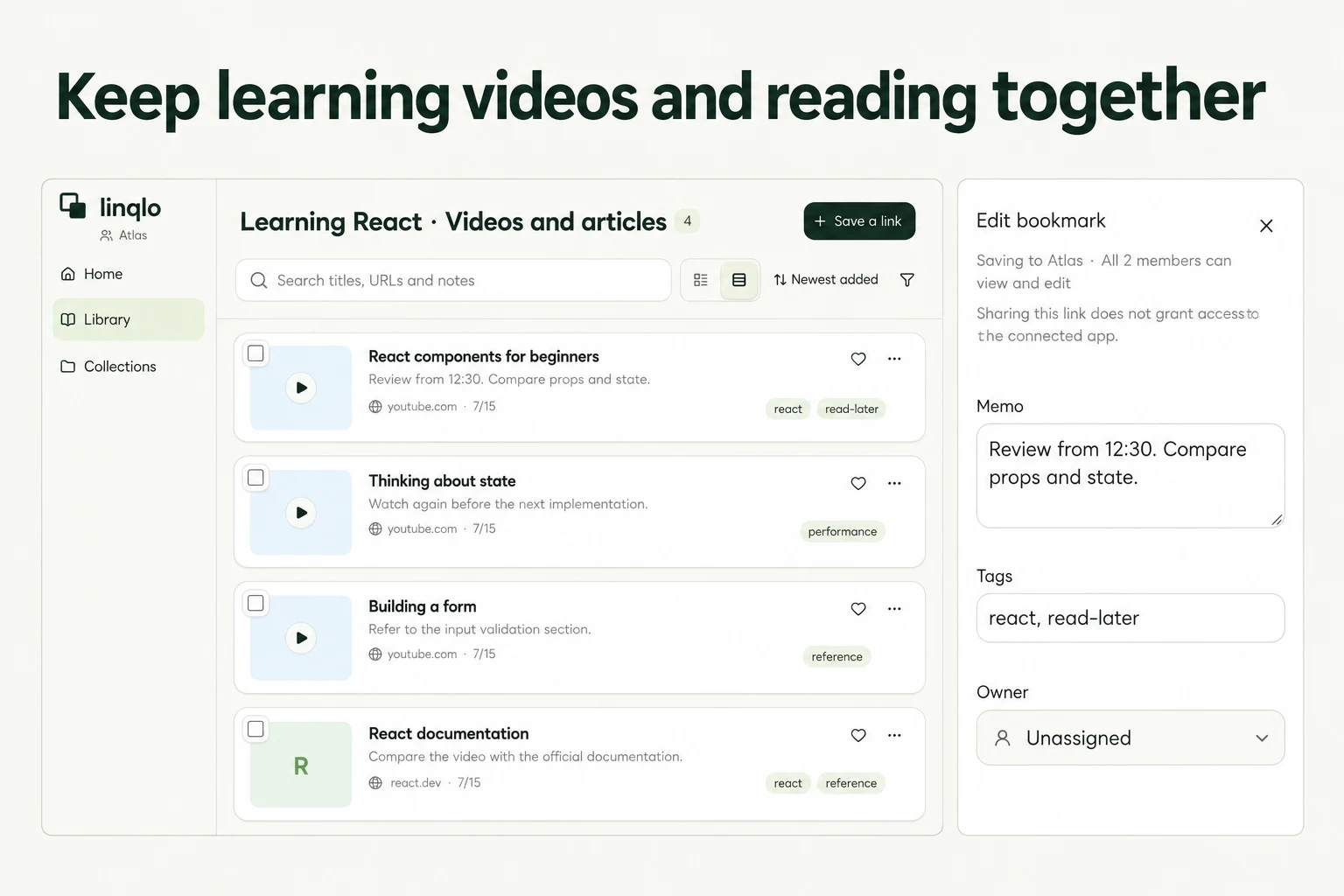
For you
Find a useful podcast moment again with a timestamp note
When you hear a podcast passage you want to revisit, save the episode URL with an approximate timestamp and a few words about the topic. A manually written memo in linqlo gives you a place to start when you want to hear it again.
Generated illustration using headphones and a notebook to represent leaving clues for listening again. It is not an application interface.
When you remember the idea but not where you heard it
You recall a useful discussion about preparing for a meeting. The idea stayed with you; the episode and its position did not. Replaying a long interview and skipping forward in small steps becomes a task you keep putting off.
You do not need to write a full summary while listening. Leave a few clues: the episode URL, a rough time, and a short description of the topic. Together, they give you a route back to the passage.
Save the episode rather than just the show
Find a URL that opens the episode you mean in the service you use. Saving only the show's main page may leave you searching through newer releases later. Reopen the link and check the episode title.
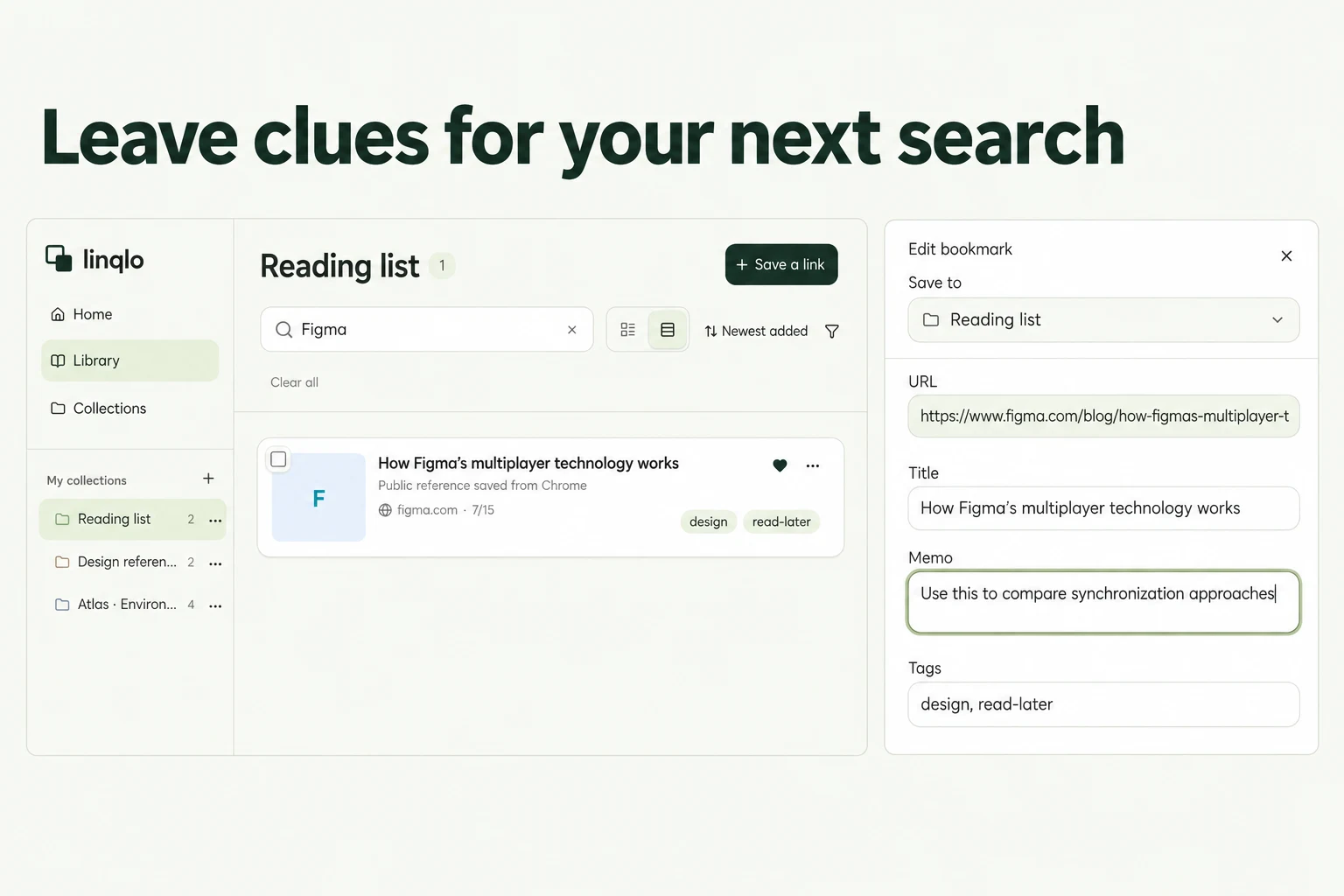
Save that URL in linqlo, then edit the “Memo” field. Keep the show and episode recognizable in the title, and add your purpose if useful: “Meeting preparation,” for example. A show name alone becomes hard to distinguish when you save several episodes.
Whether the destination opens an app, plays on the web, or requires a login depends on the source. If you intend to use the link on another device, check that you can open it in that setting when needed.
Add a topic and a purpose to “18:40”
Suppose a fictional 45-minute interview includes a useful discussion of preparation at around 18 minutes and 40 seconds. You want to revisit it before tomorrow's meeting. The episode, content, and times are invented examples.
Writing only “18:40” records a position but may not explain why it mattered. Try this:
Around 18:40: discussion of what to check first when preparing. Listen again because: I want to review my own checklist before tomorrow's meeting. Nearby clue: follows a question about the order of preparation. Record: a timestamp I noted while listening, not a quotation.
“About” matters because the note is a starting point, not a guarantee of the exact second. If the time is slightly off, the topic and nearby question can still help you find the passage.
Keep your first note brief rather than turning your impression into a confident account of everything the speaker said. If you later want to quote the speaker to someone else, listen again and check the wording and surrounding discussion.
For another useful moment in the same episode, add a second line: “Around 32:10: what to keep from a review.” A few moments you genuinely want to return to are easier to use than an exhaustive list of markers.
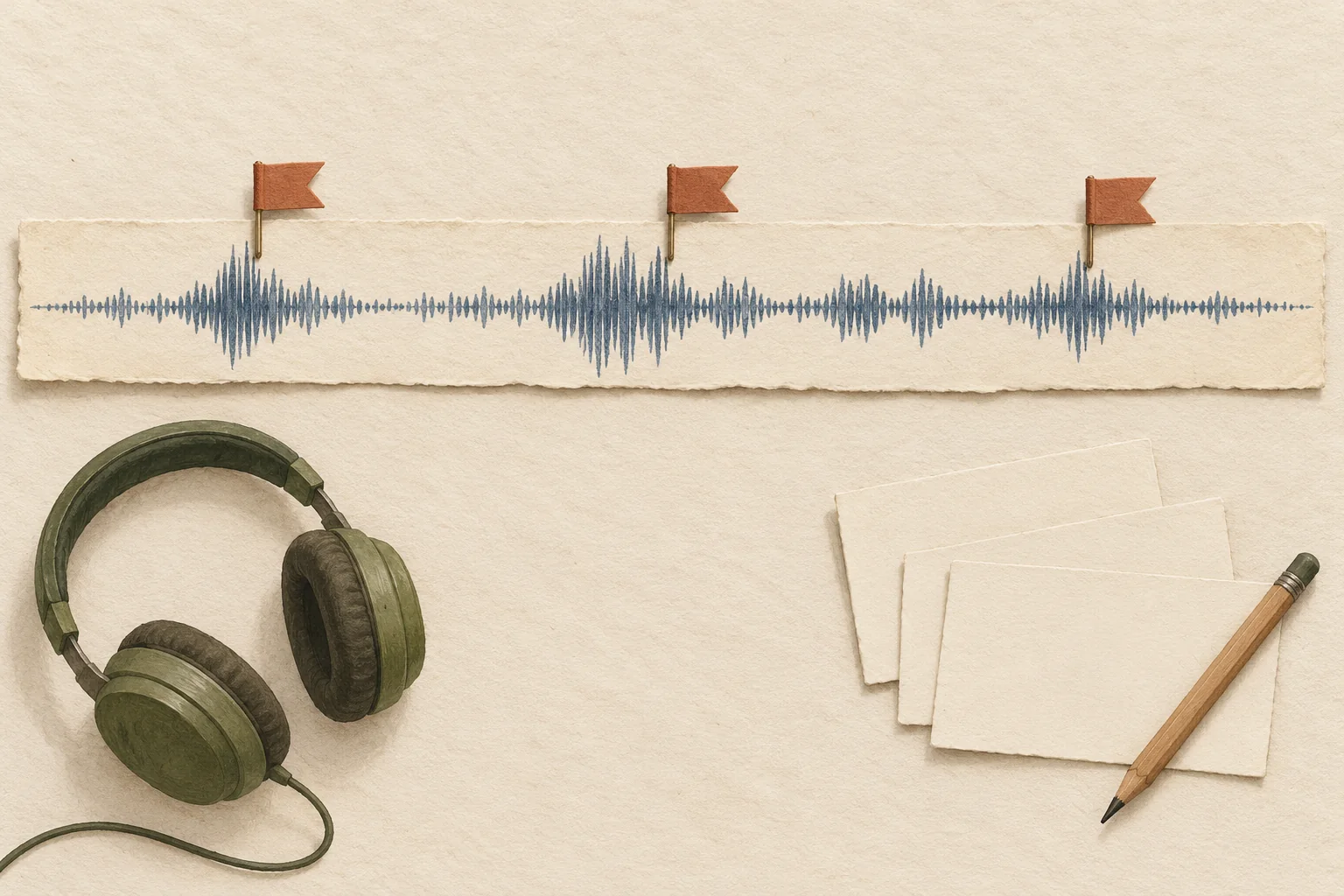
Generated illustration using a waveform and flags to represent manual audio markers. It is not actual audio data or automatic chapters.
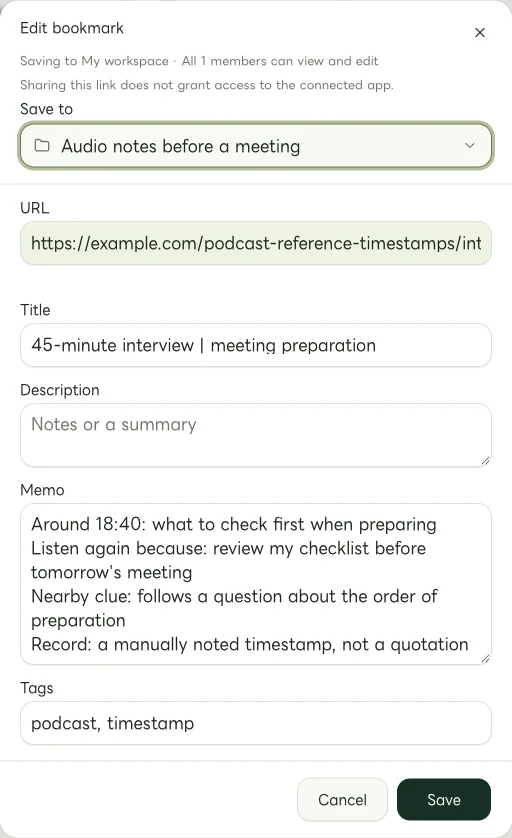
Actual Web edit dialog showing a fictional example.com link. The memo and tags are examples of manually entered information.
After listening again, write what you will use
Open the saved episode and use the source's player to begin a little before the time in your memo. Starting exactly at that second may miss the setup for the point you remembered, so check the context too.
If the timestamp does not line up, use the topic and the nearby-question clue. Correct your note once you find the passage. A saved URL and timestamp do not necessarily open directly at that position; in this workflow, you move the playback position yourself.
Then add one line about your own next action. In the fictional example, it could be: “Before the meeting, check what we need to decide and which materials are missing.” Label this “What I will try” so it stays separate from the speaker's actual words.
You can manually apply a “listen-again” tag and remove it when you have checked the passage. Update it with the memo so a completed listening task does not continue to look unfinished.
Make sure the original episode is still available
The saved link is an entrance to the source episode. Content or access conditions may change, so check the original when you need it. A timestamp note alone cannot reproduce the audio you heard earlier.
If the source offers an episode description or chapter list, use it as another clue. Keep the source's guidance, your own timestamp, and your interpretation clearly distinguished. The goal is a usable link and a useful note, without relying on playback synchronization or a notification.
Next time you hear a point worth revisiting, start with the episode URL and one line: roughly when it occurs and what you want to use it for. You can preserve a route back without documenting the entire conversation.
Related guides
Put the guide into practice.
Create a free account to get started. No credit card needed.
Start organizing for free