For you
Organize Study Materials and Resources for Exam Prep
Save URLs for practice tests, tutorial videos, and reference articles organized by subject or topic for certification exams, standardized tests, or academic study. Gather free online resources, paid course pages, and individual blog explanations in one place, then filter by difficulty level or importance using tags. This guide focuses on organizing study links — it does not automatically import content or track your progress.
What You'll Need
A linqlo account and a device with internet access. First, verify you can select the same workspace in the web version. The Free plan allows up to 500 saved items. Check remaining space and current pricing on the pricing page.
Example
A collection titled "CPA Exam 2026" with URLs for practice tests, tutorial videos, and reference articles organized by section. Use tags like "Financial Accounting," "Audit," "Weak Area," or "High Priority" to easily filter materials for review. Note study dates and comprehension levels in memos to decide when to review next.
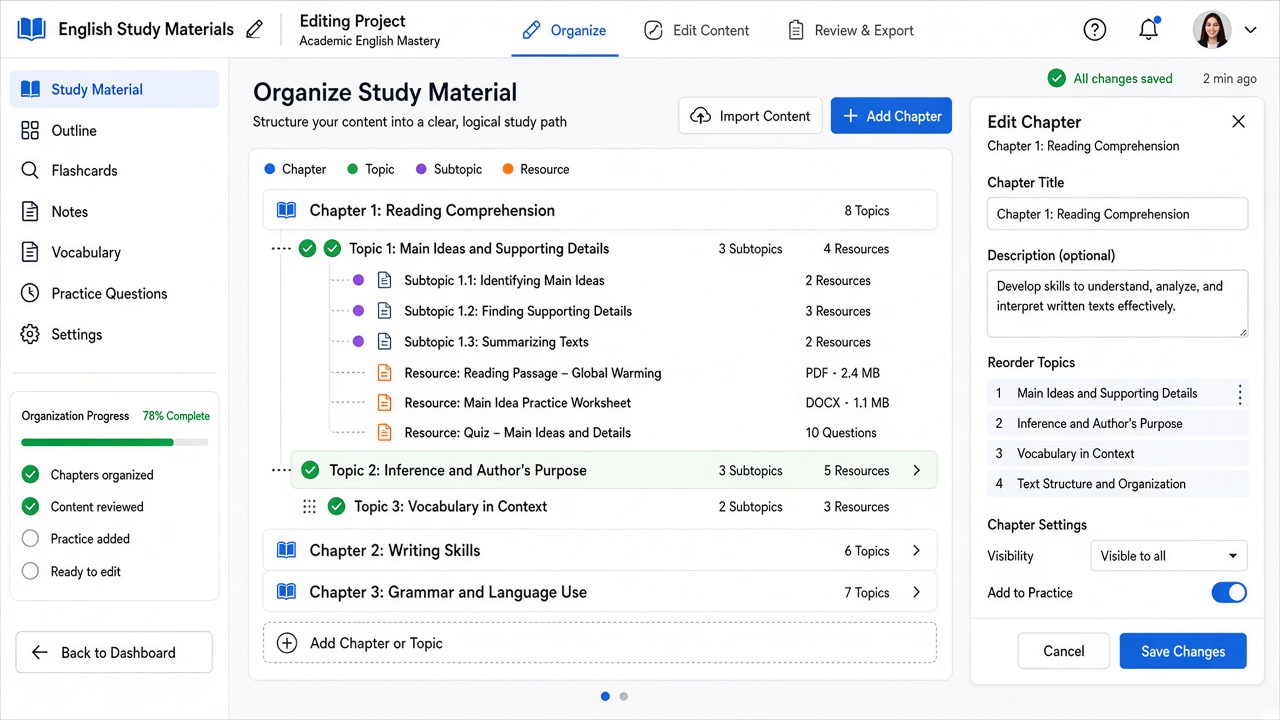
Web editing screen organizing study materials and review notes in linqlo (sample data for illustration).
The cover image is an explanatory diagram based on linqlo's actual interface, with enlarged operation areas, numbers, and arrows added. The editing screen above displays fictional data for illustration purposes.
Steps
1. Create a collection for your exam or subject
Create a collection like "CPA Exam 2026" or "GMAT Prep" for the test you're studying for. If you have multiple subjects, you can further divide collections by topic like "Financial Accounting" or "Quantitative Reasoning."
2. Save URLs for learning materials
Save 3-5 URLs for practice tests, YouTube tutorials, blog explanations, or paid course pages you'll use for studying. Save by pasting URLs and confirm that page titles appear in the list.
3. Tag by subject, topic, and priority
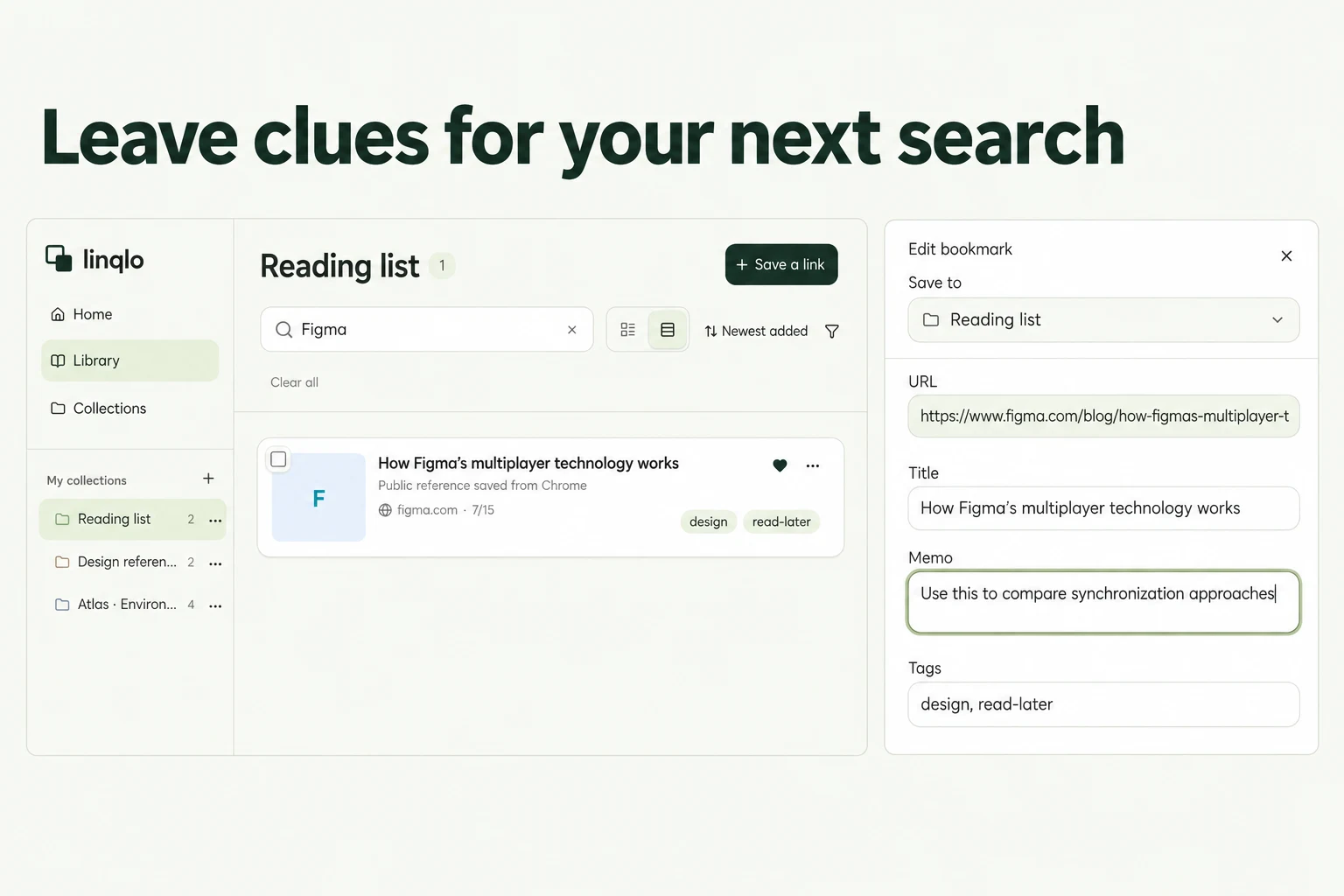
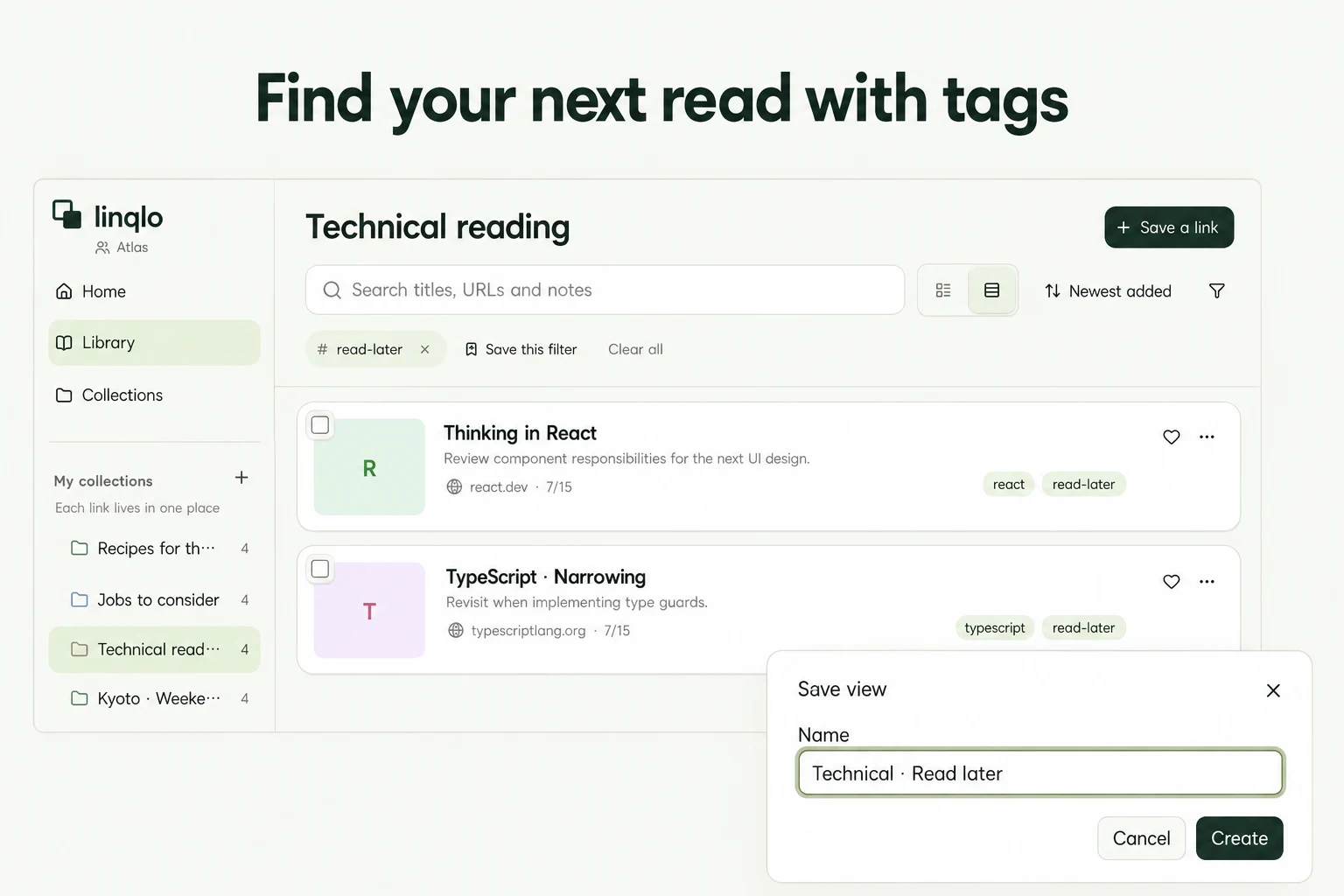
Add tags like "Financial Accounting," "Audit," "Weak Area," "High Priority," or "Frequently Tested." Apply multiple tags to the same material to make filtering easier later.
4. Note study dates and comprehension in memos
Record the initial study date, review dates, comprehension level (good/fair/poor), points you got wrong, and next review date in memos. Leave notes like "Still unclear on consolidation" or "Need to memorize journal entry patterns" to help when revisiting.
5. Filter by tags when reviewing
Filter by "Weak Area" tags and prioritize materials with fair or poor comprehension levels for review. Open the original pages to study again, then update memos when comprehension improves.
If You Can't Find or Save Items
If you can't find saved items, check your account, workspace, and collection in order, remove any unwanted search filters or tag filters, and reload the list. If you see a failure message or network disconnect, verify whether the same URL is already saved before retrying. If you're logged out, log back in and reconfirm the destination and URL. If shared content doesn't appear, copy the URL from the original site and add it manually.
What's Possible and Limitations
This organizes study links. It does not automatically import lesson content, track progress, record study time, or schedule mock tests. Save URLs for publicly available materials and open the original pages before reviewing to confirm the latest information. This is not permanent storage of lesson content — if site operators delete materials or add login requirements, URLs may become inaccessible. For paid course pages, assume access is limited to your contract period.
Common Questions
Can I automatically import courses from Coursera or Khan Academy?
No. This guide covers saving and organizing study links. There's no automatic integration with learning platforms or features for importing course content. Save URLs for materials of interest individually.
Will saved materials remain forever?
This guide covers saving and organizing URLs. If site operators delete materials, change access restrictions, or add login requirements, URLs may become inaccessible due to factors controlled by the original site. This is not permanent storage of lesson content.
Can I track study progress?
linqlo is not a learning management system. This guide focuses on organizing study links and keeping simple notes as records. If you need detailed progress tracking or automatic study time logging, use a dedicated learning management tool alongside linqlo.
Can I share study material collections with study partners?
Yes. If your pricing plan supports team features, you can share collections with specific people. However, this guide focuses on organizing personal study materials. See the pricing page for details on collaboration features.
Getting Started and Related Guides
If you haven't registered yet, you'll need to create an account. If you're already logged in, confirm the workspace you'll use before starting.
Put the guide into practice.
Create a free account to get started. No credit card needed.
Start organizing for free