For you
Keep a neighborhood restaurant list for the way you actually eat
A useful neighborhood restaurant list tells you when you would go, as well as where. Keep official pages and posts in a linqlo Collection, then add the everyday occasion each place might suit: a solo lunch, dinner with friends, or takeout on the way home.
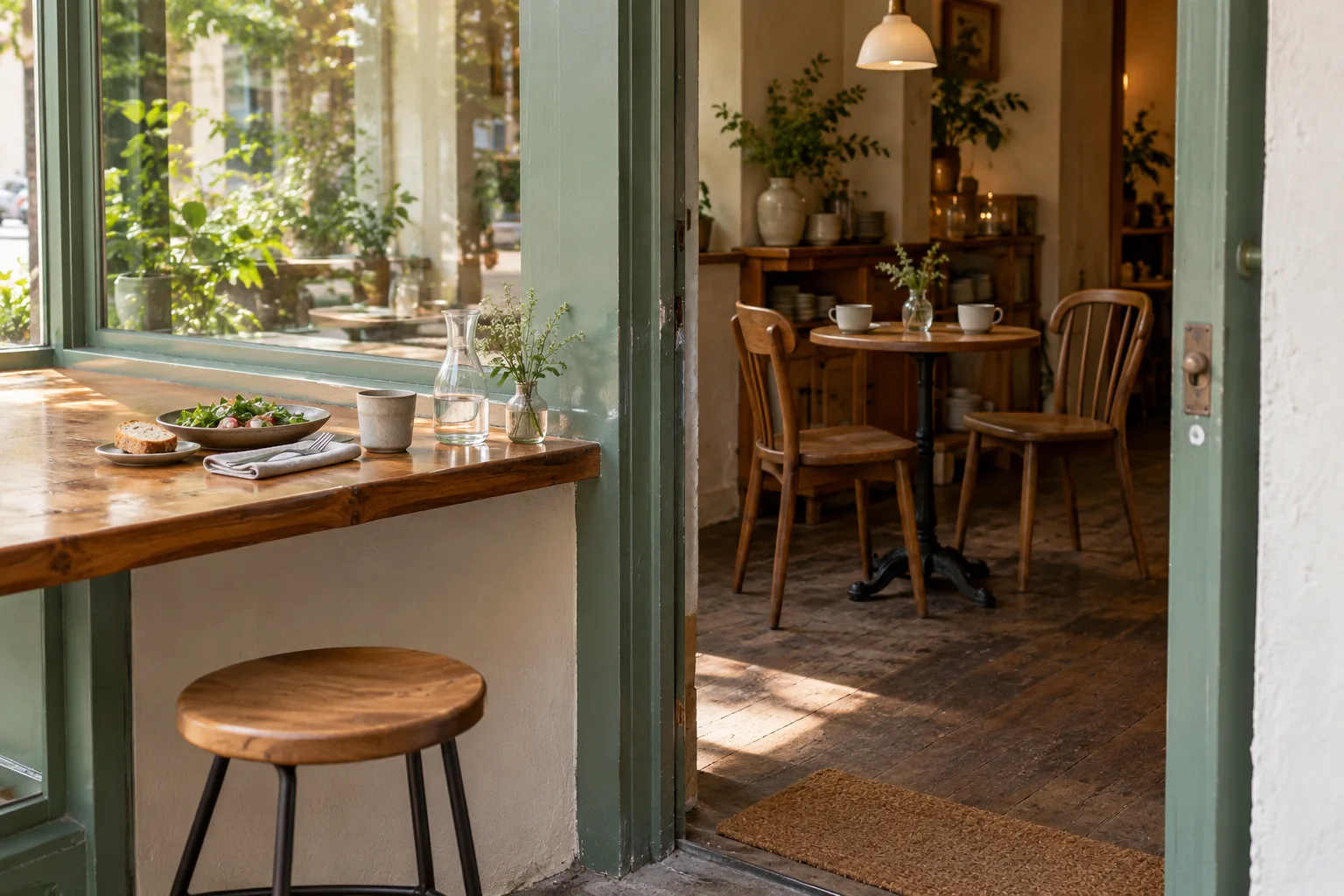
AI-generated editorial image of an imagined neighborhood cafe. It does not depict a real restaurant or the linqlo interface.
Remembering a promising place during your lunch break is frustrating when you cannot remember its name or which side of the station it is on. Give three places you have already saved a clear purpose before collecting another dozen.
Build three options around your everyday meals
These are fictional examples around an imaginary station's north exit. They are not recommendations for real restaurants.
Diner A is a possible solo lunch. A photo of counter seating caught your attention. Write: “Counter seating in the photo looked appealing. Possible weekday solo lunch. Busy periods and current lunch hours still to check.” This records what the photo showed without assuming the restaurant will suit every visit.
Bistro B is a possible dinner with a friend. Try: “I like the understated interior. Consider for an evening when we want to talk. Noise level, any table time limit, and booking method still to check.” An uncluttered photo does not establish how quiet a dining room will be.
Deli C is a takeout option on the way home. A note could read: “For nights when I want to bring dinner home. Found takeout information; check the available menu and pickup window before ordering.” Check pickup times separately from the hours for dining in.
All three places belong to the same neighborhood. At lunchtime, A is the first link to revisit. When suggesting dinner to a friend, open B and verify the conditions. One line about the occasion turns a geographic list into something you can use in the moment.
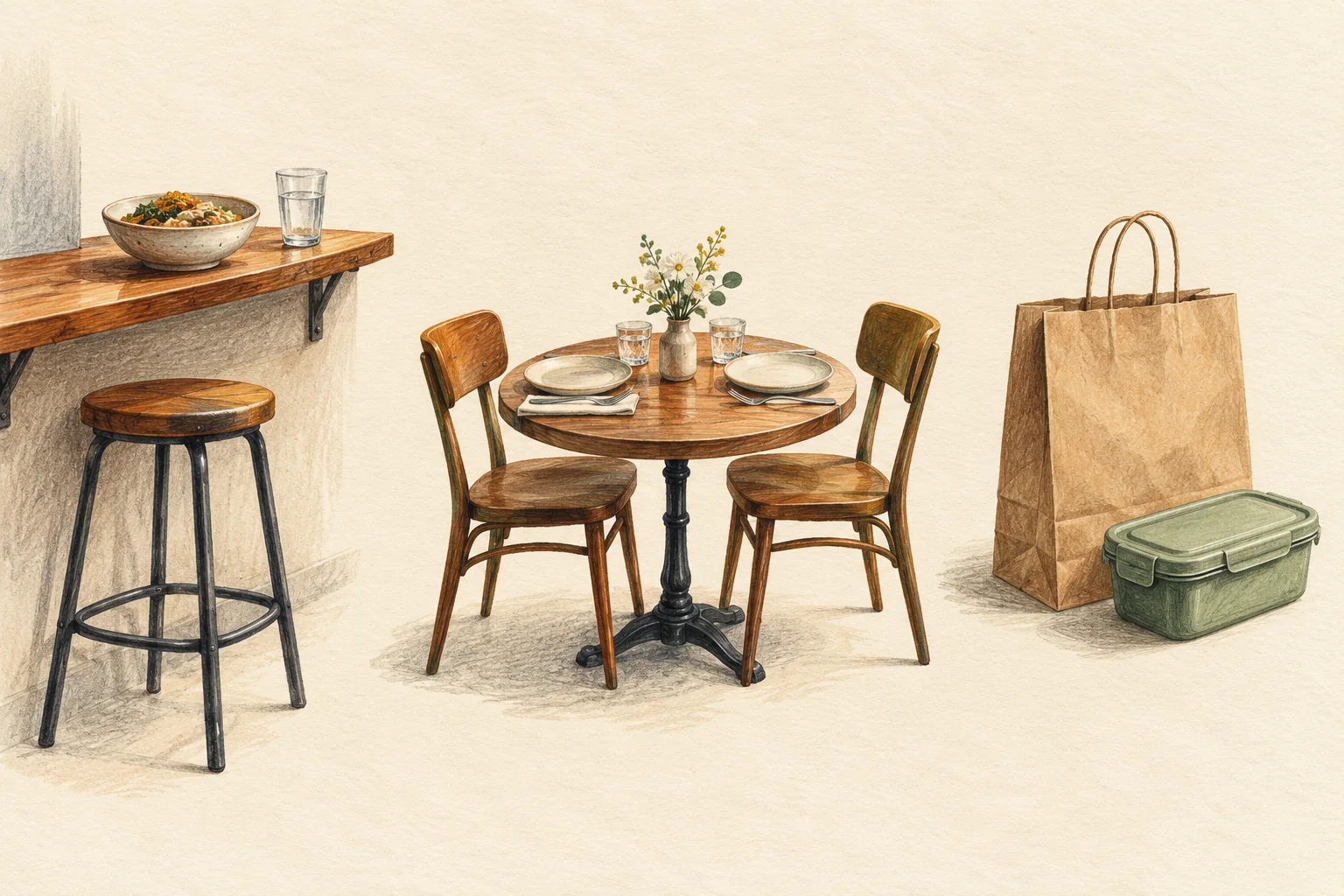
AI-generated illustration of three dining occasions. It does not show live table availability or information about actual restaurants.
Create a linqlo Collection called “Neighborhood places” and start by saving the page URLs. Open “Detailed entry,” or edit a saved link, to add titles, Memo entries, and tags.
Begin with tags such as “Solo lunch,” “Dinner and a chat,” and “Takeout.” These may be more useful than a detailed cuisine taxonomy if that is how you make everyday decisions. Add an area tag, such as “North side,” when the list gets large enough to need it.
A short note needs only four things:
- The occasion you have in mind
- What appealed to you and where you saw it
- What you have not checked
- The official source to revisit and the date you last checked it
For somewhere you have not visited, say so. “Haven't been yet” keeps your impression of a post separate from a first-hand visit. You update the notes yourself; linqlo is not aggregating reviews or checking reservation availability for this list.
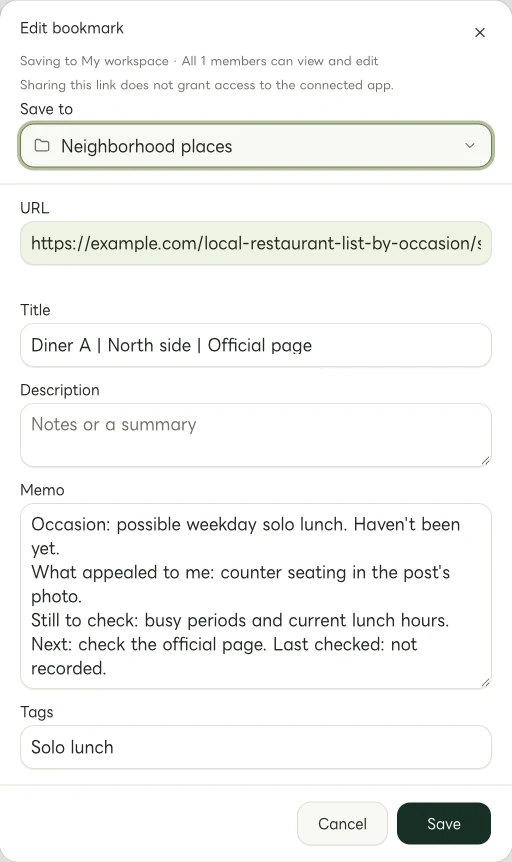
Actual Web edit dialog showing a fictional example.com link. The memo and tags are examples of manually entered information.
Keep the inspiration and the official information
A post with an appealing food photo preserves the reason you wanted to visit. The restaurant's official website or account is where you should look for its current hours and booking instructions. Keep the original post, then find the official source you will need before going.
Check the address and branch name. A similarly named place or another branch may have different information. Titles such as “Restaurant name | North side | Official page” and “Restaurant name | Post I liked” make the purpose of each link clear.
If you cannot find an official source, write “Official information still to find.” There is no need to fill the gap with a guess. Keep that place for a day when you have time to investigate, rather than relying on it for a tight lunch break.
Check before going; leave one line afterward
Before leaving, open the official source and check that day's hours, closure notices, and booking arrangements if needed. For takeout, check ordering and collection conditions too. An old note about regular hours is not a guarantee for today.
After a visit, you can add a dated observation tied to the circumstances: “Weekday lunch, just after noon, on my own. The seat I had worked well for a relaxed meal.” Only write this after actually visiting. It is a record of that experience, rather than a claim that the restaurant is always quiet or always has seats.
If you could not get in, a next step is useful too: “Check the official information before trying again.” A line after each real visit gradually makes the list reflect how you use your neighborhood, rather than just how its restaurants look in photographs.
Related guides
Put the guide into practice.
Create a free account to get started. No credit card needed.
Start organizing for free